The Billion-Dollar Lie
The habit tracking industry is worth $5.5 billion.
And it's built on a lie.
Here's how it works:
You download an app. You add some habits. Meditate. Journal. Exercise. Drink water. Read 20 pages.
A grid appears. Empty boxes waiting to be filled.
Day 1: Check. Day 2: Check. Day 7: Check.
The streak grows. You feel good.
Then life happens.
You miss a day. Maybe two.
The streak resets to zero.
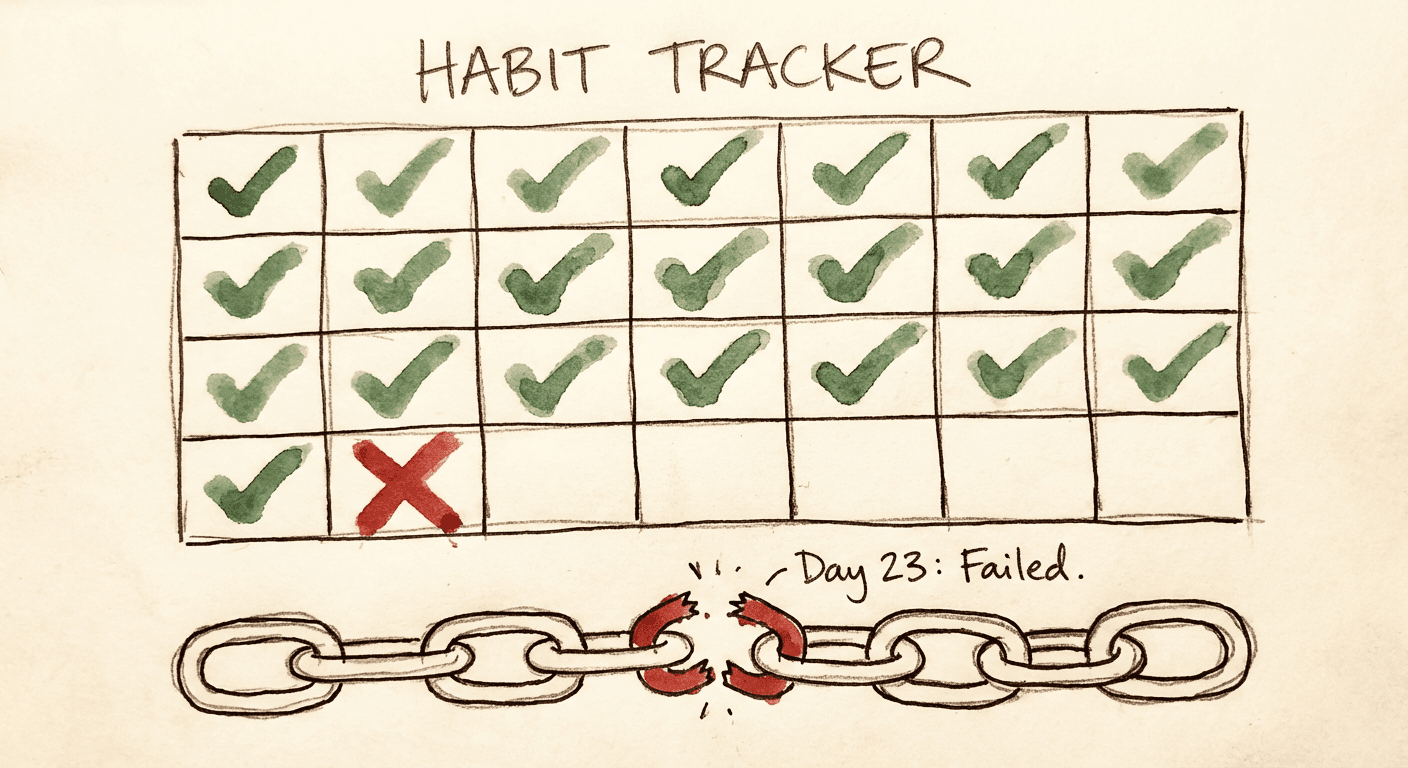
You feel like a failure.
The app sends you a notification: “Don't break your streak!”
As if missing one meditation session erased all the work you'd done.
This is the game.
Streaks create anxiety. Anxiety drives engagement. Engagement sells premium subscriptions.
You're not the customer. You're the product.
But here's the deeper problem:
Even if you never break a streak — even if you maintain perfect consistency for years — something is still missing.
Streaks measure consistency. They don't measure meaning.
You could meditate for 365 days straight and still feel lost.
You could journal every morning and still not know what you're building toward.
You could track 12 habits perfectly and still lie awake at 2am wondering:“Is this it?”
That's because habit trackers track the WHAT.
They never ask the WHY.
- Why are you meditating?
- Why are you waking up at 5am?
- Why are you reading 20 pages a day?
- What are you actually building toward?
Without answers to these questions, habits become empty rituals.
Streaks become shackles.
And “self-improvement” becomes a hamster wheel dressed up as progress.
I know this sounds harsh.
But I'm telling you because there's a way out.
It starts with one question.